


With the recent passing of Angelo Schepis, who founded Artedomus in 1985, we reflect on his legacy and share cherished memories of Angelo from our people, friends and partners.
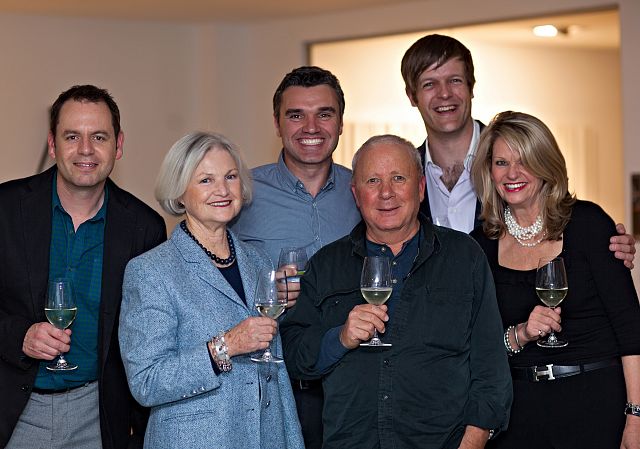
Angelo Schepis sought quality, beauty and knowledge above all. When he founded Artedomus (then Domus Ceramics) in 1985, it was with the intention of building a business around exceptional quality product and providing a depth of expertise that would ensure the integrity of that product remained uncontested in the Australian market.
He came to his new business with an established knowledge of stone and ceramics and could see that while many companies were bringing these products into Australia, they lacked superiority and sophistication.
“I’ve always been attracted to things outside of the square,” Angelo told Mischa Way during an Artedomus brand discovery interview in 2013. His eye for the unique, his technical knowledge and understanding, and his pursuit for perfection in the details, was instrumental in elevating Australia’s architectural surfaces market, while also expanding the creative horizons of the country’s most visionary and creatively ambitious architects.
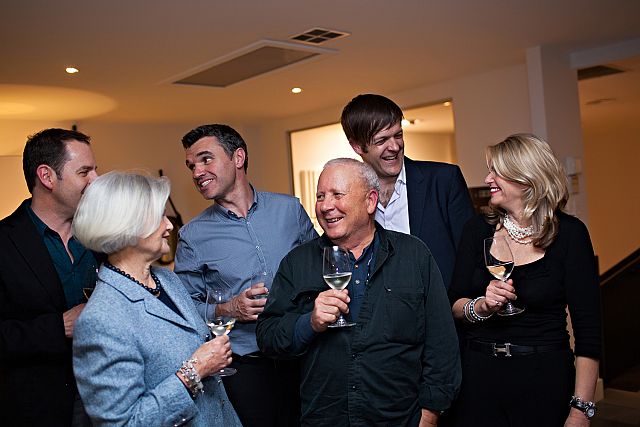
Friendships forged over food
Domenic Alvaro, director at Woods Bagot, describes Angelo as a dear friend who had a profound influence on his early career. “He had an enduring passion for design and a deep love of stone. As a true pioneer of our industry, he founded Artedomus with a commitment to quality, innovation, and the advancement of design culture,” says Domenic. “He continually encouraged me to push boundaries in my own work and to never abandon an idea worth pursuing. [These were] lessons often shared over long conversations and plates of pasta at his home or showroom. He will always have a special place in my heart.”
Angelo was an enthusiastic cook with a great sense of hospitality, and many of his friendships and business partnerships were nourished over home-cooked meals. As Artedomus’ co-founder Brad Hancock recalls: “Angelo came to Australia from Sicily as a young man, when Australians drank beer, and not wine with dinner, to his amazement!” Loyal to the flavours of his homeland, it was often the case that a crate of Italian tomatoes or olive oil might arrive alongside a shipment of natural stone. And no surprise: “He cooked his way into the hearts of many architects, talking design over the food he’d cooked the way his mother taught him,” says Brad.
Business was conducted through friendship and hospitality, but never at the price of honesty and integrity. Angelo didn’t believe in overselling a product, rather he let the product speak for itself, supported by his expert understanding of natural products, and appreciation for good design. “Angelo led Artedomus with innovation and integrity, he gave honest advice, always stood by the quality of the products, and expected perfection down to the finest installation detail,” says Phil Brenton, managing director of Artedomus.
Angelo also believed that natural stone had a living quality to it, likening it to a companion for life. “Natural products actually look better [over time] and you [feel] affectionate – like you would [toward] an old timber table, or a couch,” he said. “Natural products tend to become part of the family.” Their beauty and quality, he said, would ensure they transcended trends and time.
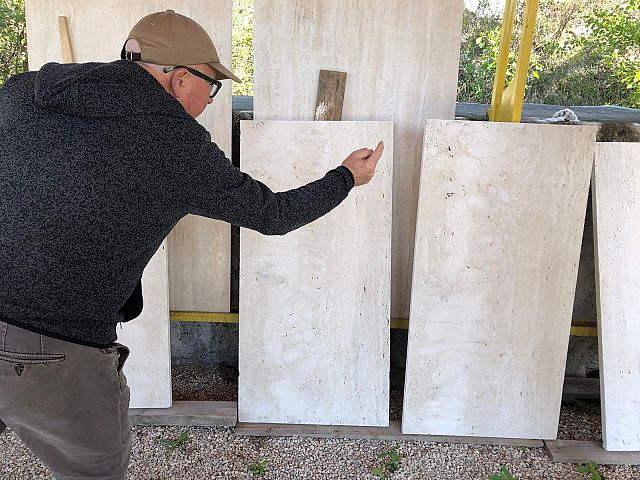
Changing the face of architectural surfaces
Among Angelo’s most enduring legacies to the Australian design industry is Artedomus Isernia. Long before it became ubiquitous, he discovered this distinctive stone and brought it into the local market under a carefully chosen name. As Phil recalls, “Angelo called it Isernia, which is located in a completely different part of Italy to where he had sourced it, in order to throw people off. For decades people would travel to that exact town, trying to find Isernia…” Under Angelo’s stewardship, the stone was quickly embraced by leading residential architects as the ideal material for luxury homes and developments, and it remains in demand today.
He was also the first to sandblast natural stone on a large scale in Australia, contributing to it becoming a mainstream finish in the local market. “Angelo has truly helped shaping the natural stone industry in Australia and it was a privilege and an honour to have the opportunity to get to know him and be a small part of his journey,” reflects Andrea Fongaro, Bagnara’s area manager for Oceania and South East Asia.
Marco Manetti of Cotto Manetti recalls his earliest meetings with Angelo, who introduced Manetti’s Italian terracotta to Australian architects and designers. “Angelo was a pioneer,” recalls Marco. “He was the first to recognise the potential of fine Impruneta terracotta for the Australian market; we remember with great pleasure and joy our meetings at Tenuta Tignanello in Tuscany, a place he often visited during his holidays in Italy. We are deeply grateful to him for the passion and vision he demonstrated.”
Phil also credits Angelo with creating the category of Japanese ceramics in Australia. It’s been 20 years since Artedomus began supplying INAX, a relationship that began when Angelo spotted the ceramics at an Italian design fair in 2005. He flew directly to Japan to see them firsthand. From an initial handful of designs, these tiles helped define a new ‘Japanese ceramic’ aesthetic in the local market. From INAX’s perspective, it opened the company to a new region of relationships and design. “Angelo was instrumental in shaping my professional and personal journey; it is entirely thanks to him that my life became so closely intertwined with Australia,” says INAX’s Yumiko Matsuoka, who worked closely with Angelo in those early years. “His influence will stay with me always,” says Yumiko san.
Some of the original products Angelo introduced, including INAX Yohen Border with its unique rectangular shape, and INAX Hosowari Border with its rough-hewn face and smooth angled edges, remain enduringly popular today. “We will never forget the contributions [Angelo] made to introducing INAX tiles to the Australian market,” comments INAX’s Sugiyama. “Artedomus and INAX team are all good friends and enjoy working together thanks to you.”
Angelo also brought Italian bathware brand Agape into Australia in 2003, challenging and inspiring a market not quite yet ready for the level of refinement and bold vision that Agape represented. Angelo was adamant it was the “best product in the world”, says Phil, and persevered with it, until it not only found its audience but helped establish the very category of designer bathware in Australia.
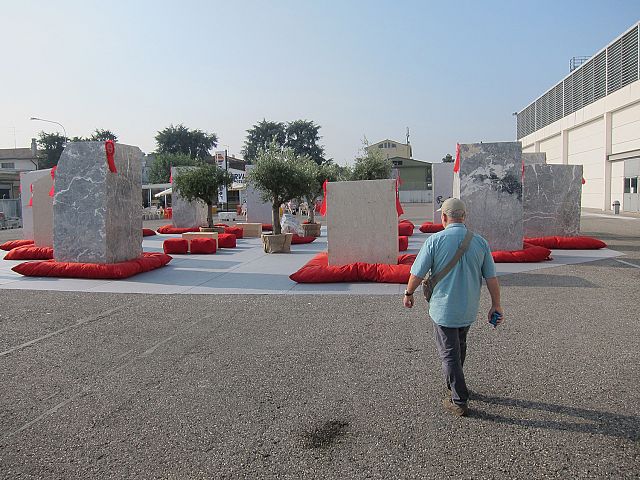
A business built upon relationships
Finding the world’s most exquisite natural products was core to Angelo’s vision for Artedomus, however tantamount to this was working with the right people, too. He wanted clients and designers to seek out Artedomus not just for the products, but for the relationships they held with himself and his Artedomus colleagues.
As Artedomus’ national technical products manager, Roger Elliott recalls, Angelo was deeply interested in people, and in the company of designers especially. “Angelo’s appreciation for design resonated with his cooking,” says Roger. Conversations over dinner would move between the experience of delivering a design and the beauty of the design itself. “Each dining experience with Angelo served the appetites of both the stomach and the heart.” He drew the attention of many to the work of a few, and built lasting relationships through good food and passionate conversation. It’s a legacy of generosity and friendship that we proudly continue through Artedomus today.
Vale Angelo, a man of many talents.