


Italian design house Mutina expands the dialogues of ceramic design and structural innovation with Mutina Bricks. Launched at Expo ’26, Artedomus showcases eight Mutina Bricks – some available for the first time in Australia.
Now available in Australia through Artedomus, architects and designers are able to view, experience and specify Mutina’s most popular and internationally renowned Mutina Bricks ranges. Artedomus’ extensive range of Mutina Bricks was launched last week at the opening of Expo ’26, a major exhibition of new products and architectural surfaces.
Mutina is expert in ceramic ideation and design and loves to work with like-minded designers and artists who seek to push the boundaries of material and space. “Mutina always looks to find a way to push ceramic material beyond its conventional functions, in terms of expression, suggesting new meanings for the surface and the covering,” says Matilde Gandolfi, brand development manager at Mutina.
Working with Spanish designer, Patricia Urquiola, Mutina introduced its very first brick design into the market in 2014. According to Matilde, working with Patricia “opened Mutina up to new spatial possibilities” and an ever-broadening dialogue around ceramics and architectural space.
Much of Mutina’s brick products are produced using locally sourced clay from the Modena region of Italy. For Mutina Bricks, extruded terracotta is preferred for its stability prior to firing, which allows Mutina to achieve quite challenging geometries and new shapes.
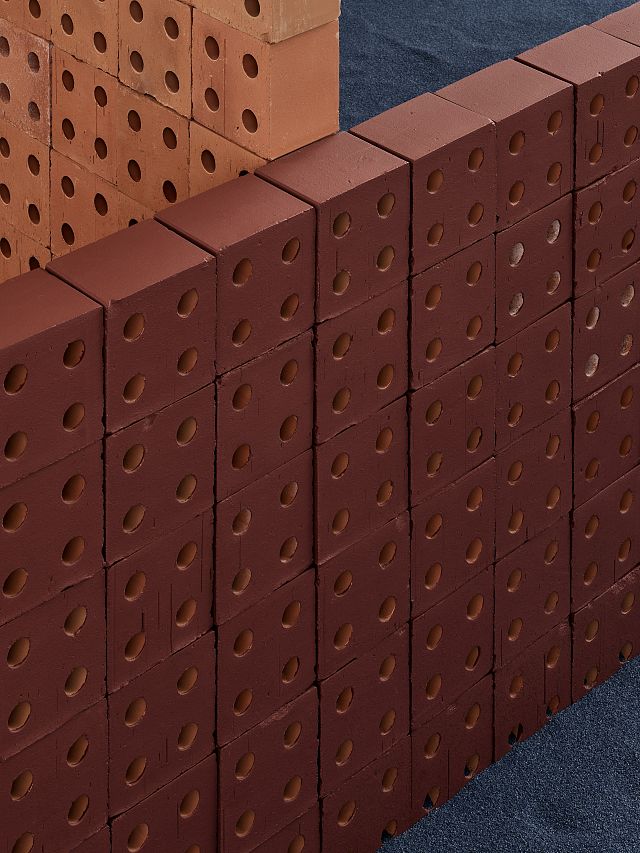
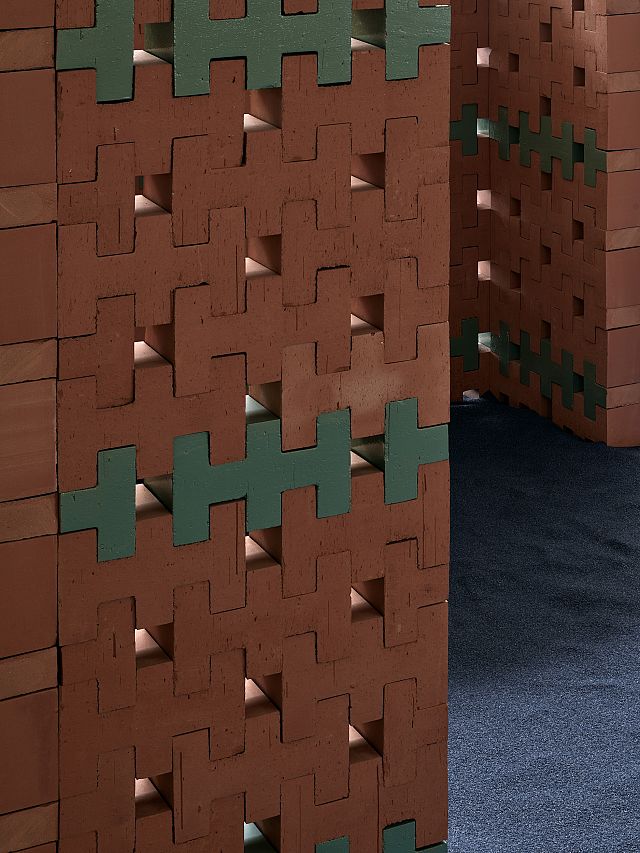
Celosia
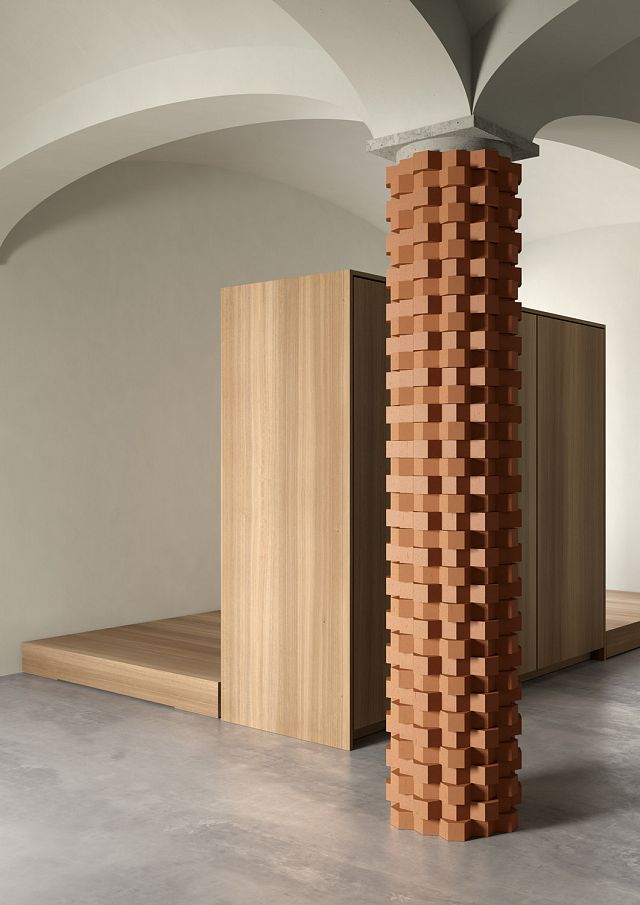
Celosia is the first official Mutina Bricks released by Mutina, and marks a key development in their collaborative partnership with Patricia Urquiola. Celosia’s geometry makes it simple to realise curved walls and form rounded alcoves, as well as substantial partition walls. Ideal for outdoor use, too.
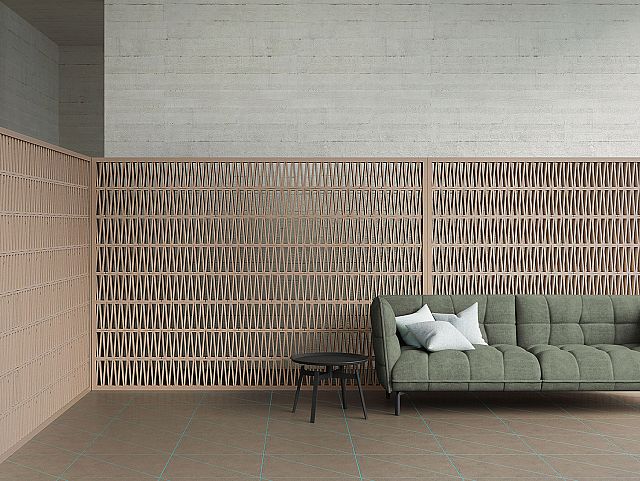
Jali, Patricia Urquiola’s second Mutina Bricks design, is inspired by traditional Indian latticework. Each brick features a large central hole, designed to interact with light and perforation and function in a filtering capacity.
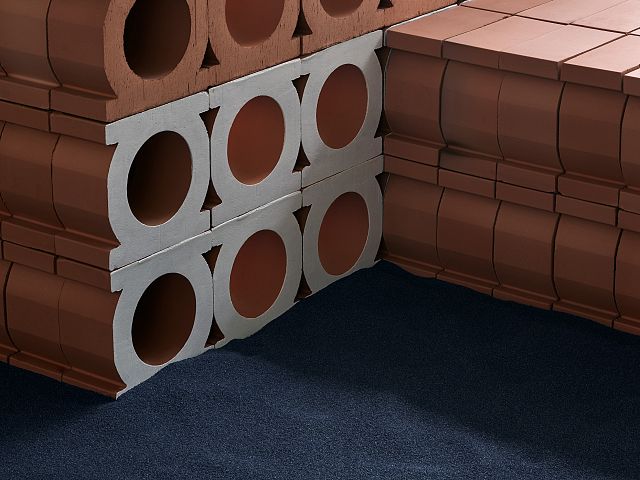
Brac by Natalie du Pasquier, is the artist’s first Mutina brick, borne from an art-led exploration of colourful brick towers and built around a simple module with a curated palette of four coloured glazes. Brac gives designers the flex to create rhythmic, highly composed walls by mixing natural terracotta with the glossy glaze of its curate colour palette. Brac is available in colours of Argilla, with a natural matte surface, Bianco, Salvia, Marrone and Nero, with a bright glazed finish.
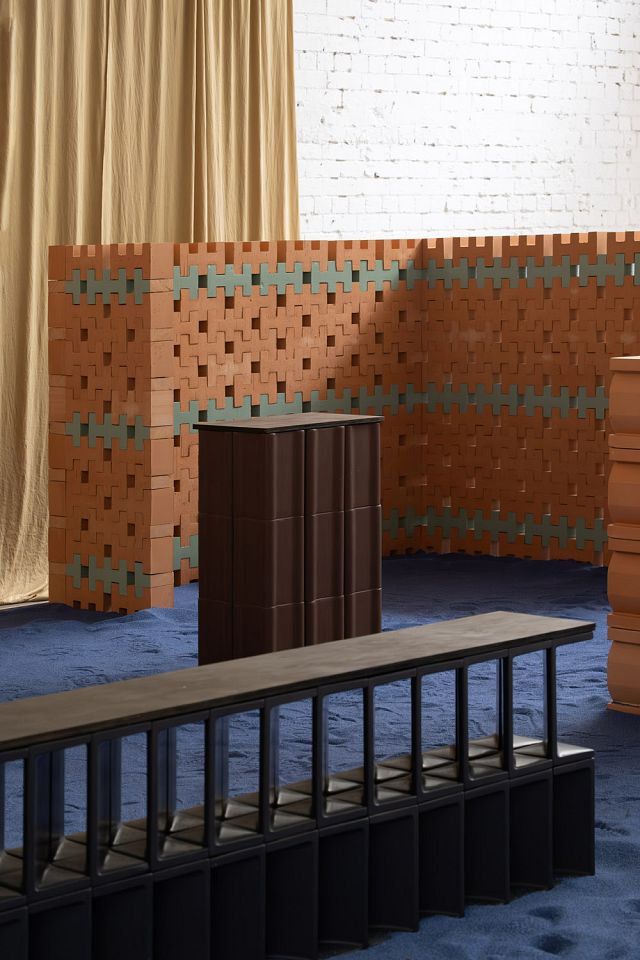
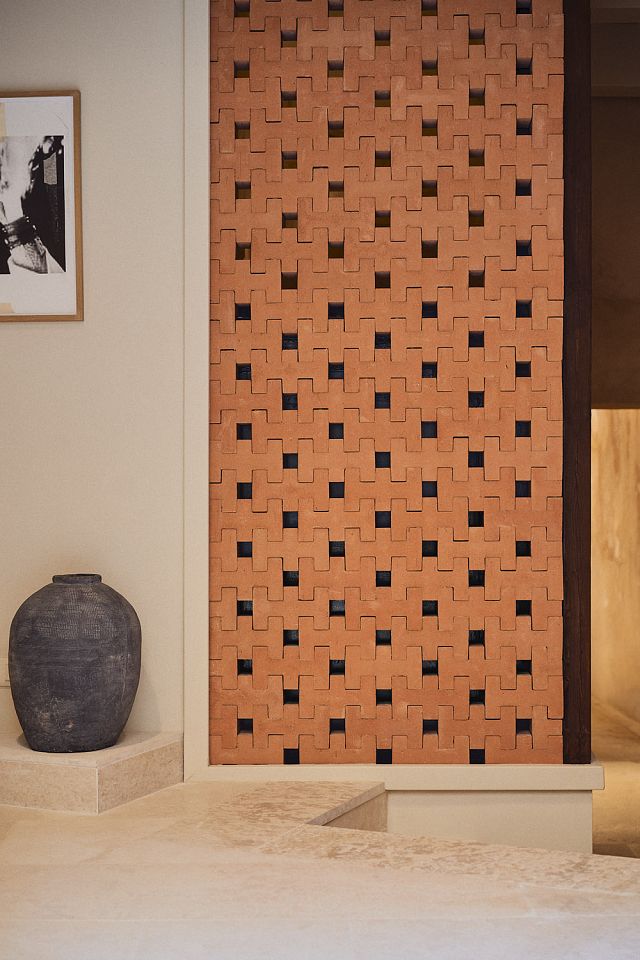
Hives by Konstantin Grcic exemplifies the flexibility and creative possibilities that Mutina Bricks afford the user. Its hexagonal design allows it to be used vertically and horizontally, laid flush or in a staggered arrangement giving birth to curved walls, columns, counters, table legs and more. Its flexibility highlights the product as an architectural system rather than a singular element.
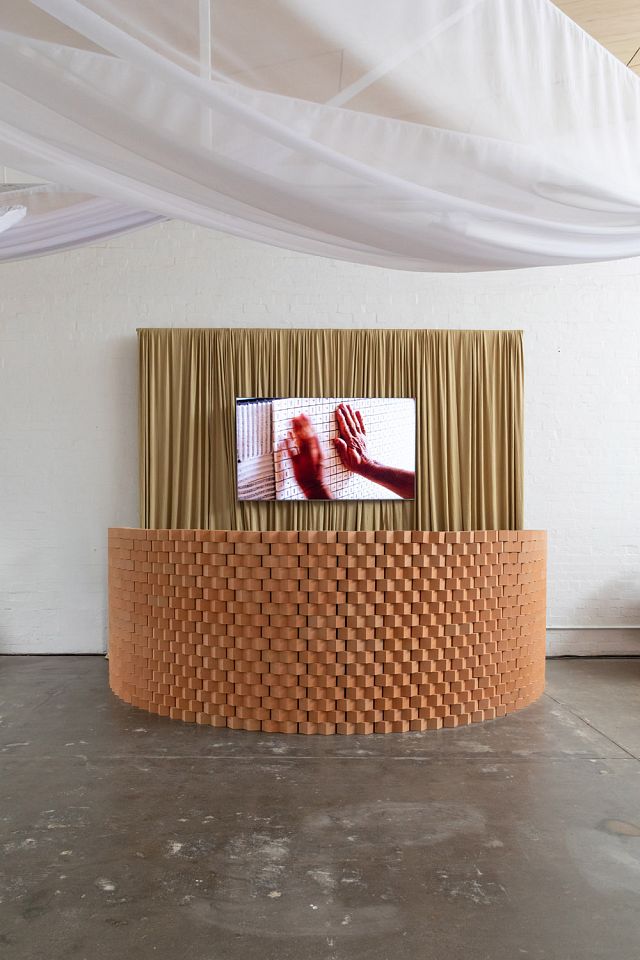
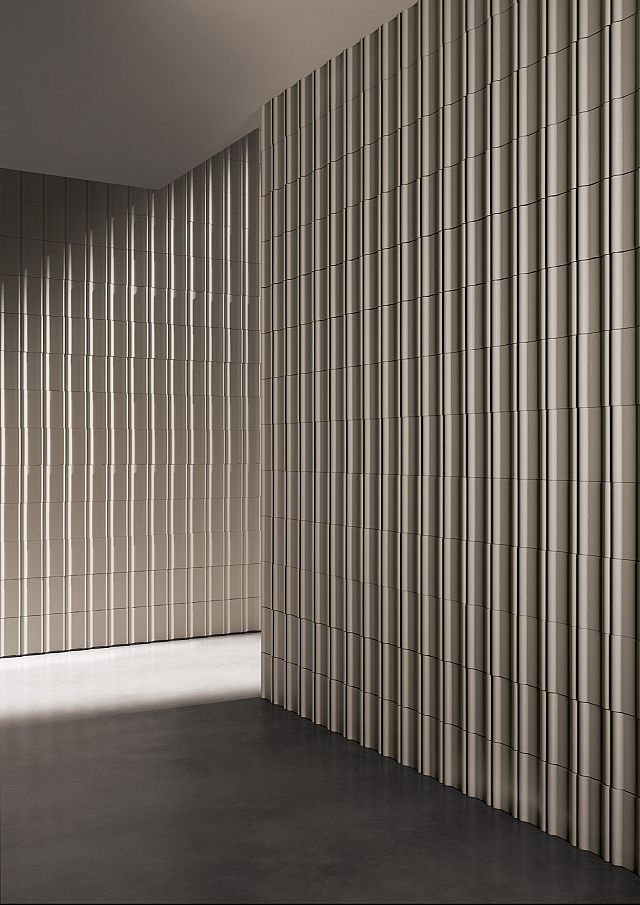
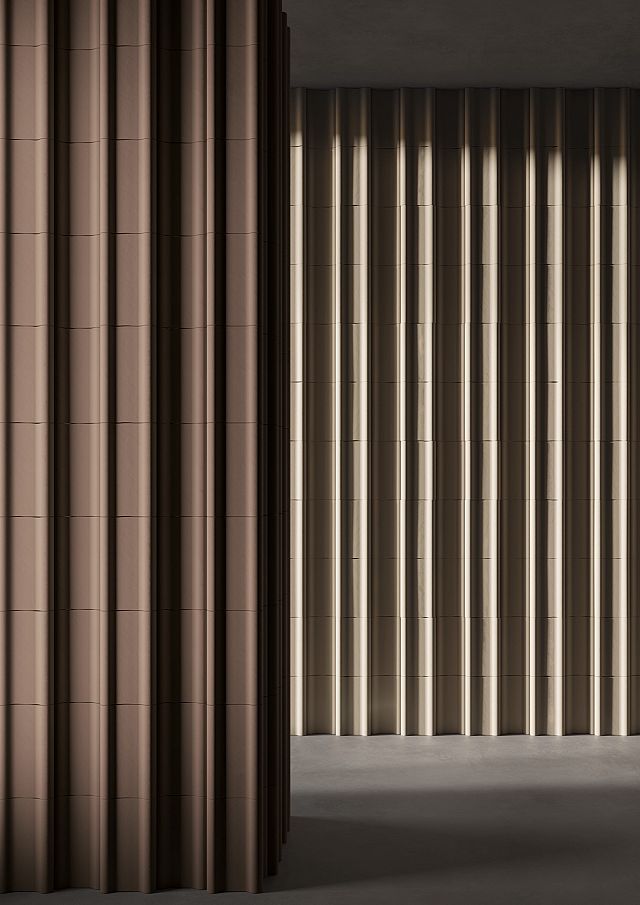
Renga, designed by Vincent Van Duysen, has been conceived to create partition walls, but sits also as a decorative object in its own right. Its cylindrical corners soften the square based design, while it is cast using coloured liquid stoneware to give it a tactile matte finish. Available in shades of Ivory, Brown and Grey.
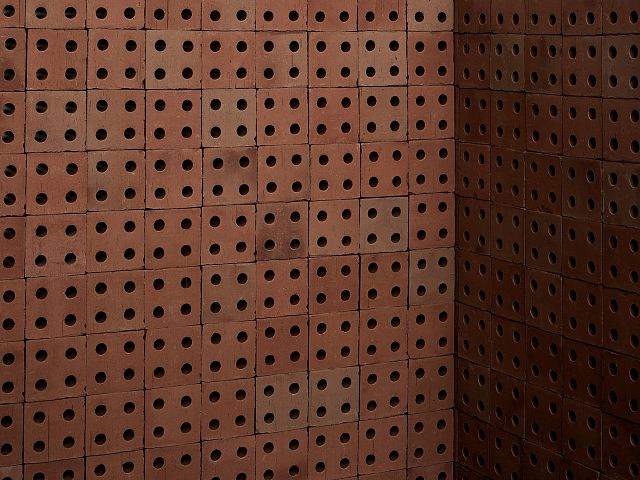
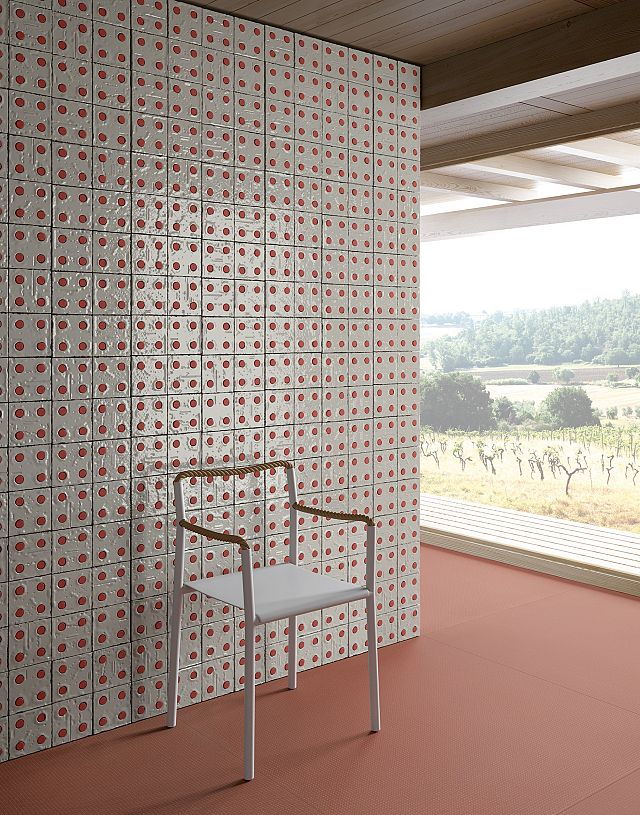
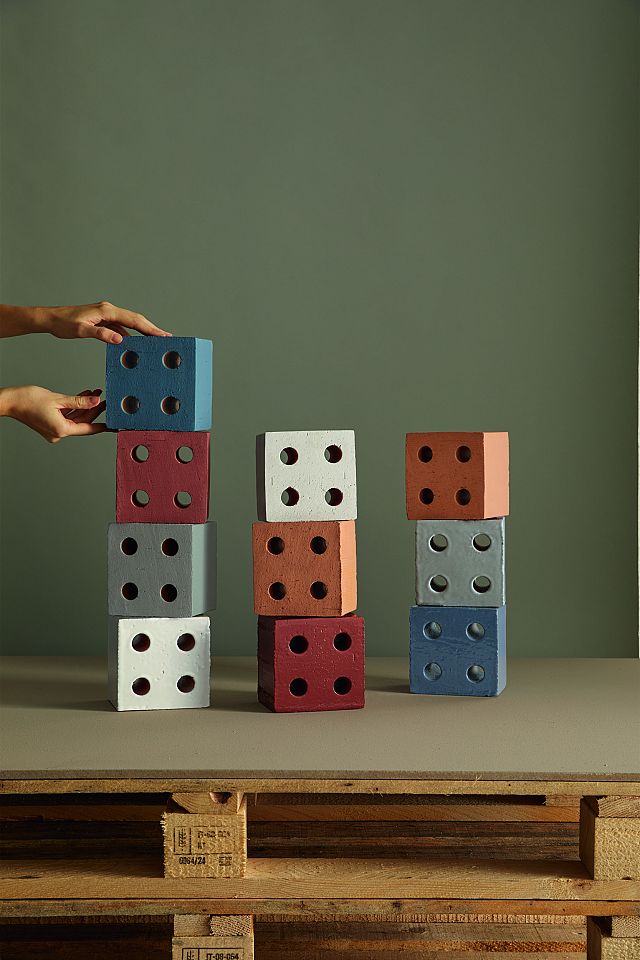
Bloc by Ronan Bouroullec is a versatile terracotta brick ideal for building architectural and decorative structures. It’s simple yet compelling design features four cylindrical holes framed within the brick’s square composition. Made all the more expressive in its natural terracotta tone, juxtaposed by a palette of Pearl, Blue, Red or Grey shades in matte or glossy finishes.
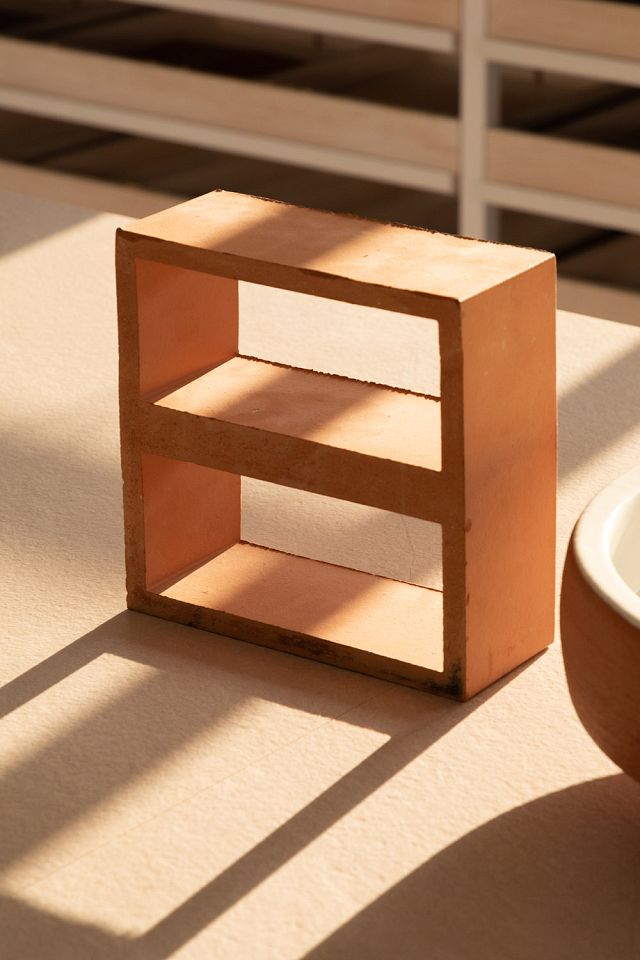
Tally, designed by Michael Anastassiades, is a seemingly simple yet incredibly diverse collection that plays with tally-like patterns expressed through extruded terracotta and negative space. The collection consists of two bricks – one divided into two gaps by a single line (wide), the other divided into four (narrow). These can be used vertically and horizontally, individually and in unison, to create playful combinations of patterns and visual textures.
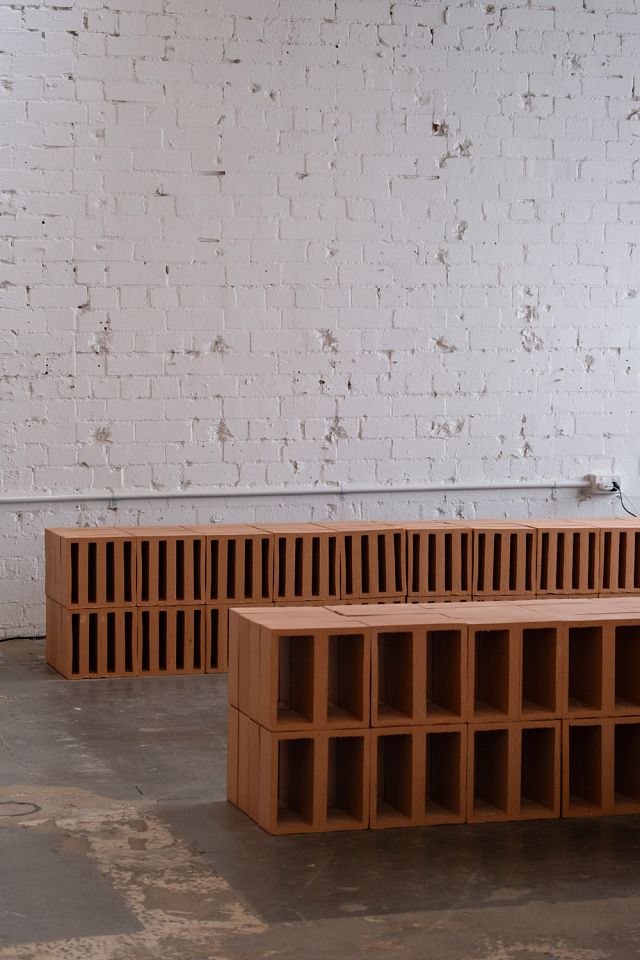
Mistral by Barber & Osgerby is reminiscent of terracotta vent tiles traditionally used in rural Italian barns and outbuildings to provide natural ventilation. Taking this subtle architectural detail, the designers have reimagined it in the function of a partition, using it to shield and reveal. Mistral, available in shades of Black, Owl and White, can be used horizontally and vertically to create artful plays of light and shadow, indoors and out.
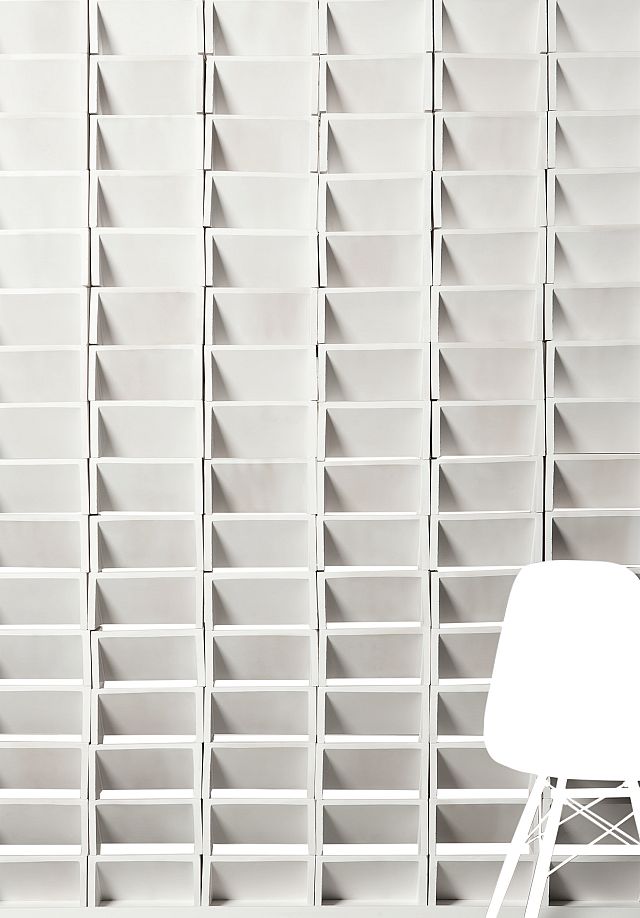
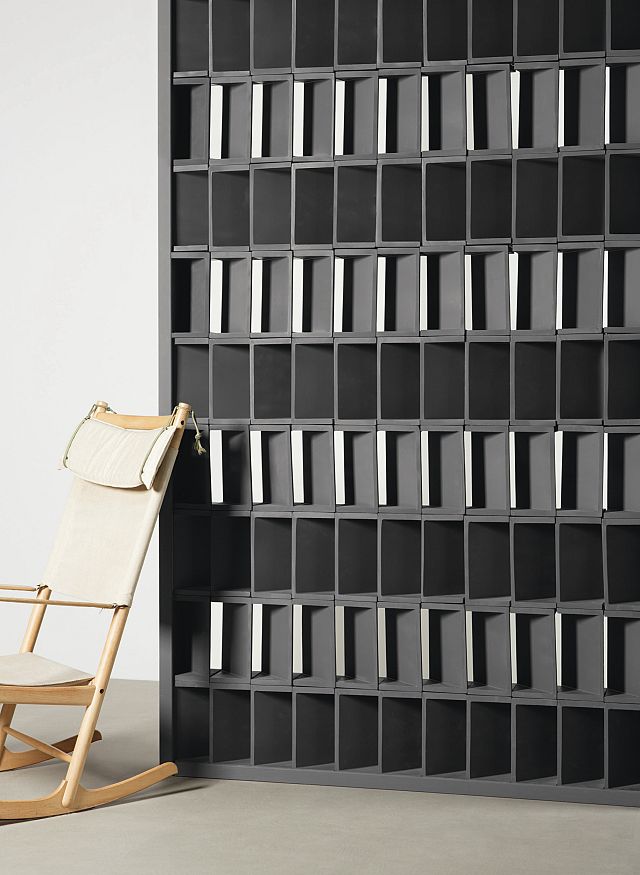
Common to all Mutina Bricks ranges is their versatility, borne from the simplicity of the shapes and clever geometries which can be tessellated and manipulated to work at various angles and in numerous compositions. From curving walls and partitions that eschew the more traditional right-angled approach, to benches, tables, seats and alcoves. The options are limited only by imagination.
View Mutina Bricks at Artedomus’ Expo ’26, now showing in Melbourne. Book your viewing.
Photography by Joanne Ly and courtesy of Mutina